

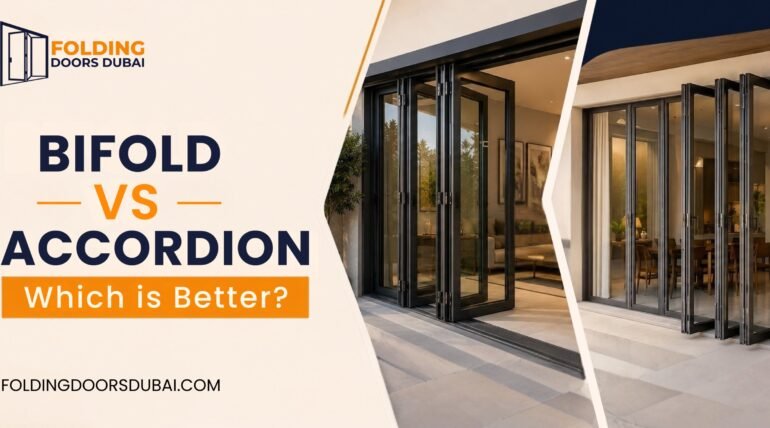
Choosing the right door system is important for improving both the appearance and functionality of a home. Among modern door options, bifold doors and accordion doors are two popular choices because they save space and create flexible openings. Many homeowners and villa owners compare these options when designing living rooms, patios, balconies, and interior spaces. Although both types use folding panels, they differ in design, durability, insulation, and overall performance. Bifold doors are usually associated with modern luxury homes because they provide large glass openings and a premium look. Accordion doors, on the other hand, are commonly used for compact spaces and indoor partitions because they are lightweight and affordable. Understanding the differences between these systems helps homeowners choose the right solution for their needs. This guide explains bifold vs. accordion doors in detail, covering design, material, security, maintenance, and cost to help you decide which option is better.
Bifold vs Accordion Doors: Which Is Better?
Understanding Bifold Doors
Bifold doors are made of multiple panels connected with hinges that fold neatly to one or both sides when opened. They are mostly used in patios, villas, balconies, and modern homes because they create wide openings and improve natural lighting. Most bifold systems use aluminium, glass, or uPVC frames, making them strong and durable for long-term use. One of their biggest advantages is the ability to connect indoor and outdoor spaces smoothly. These doors also provide a sleek and modern appearance that increases property value. Many modern bifold systems include thermal insulation and secure locking systems for better performance. Homeowners often choose bifold doors for luxury spaces because they combine style, functionality, and durability in one solution.
Understanding Accordion Doors
Accordion doors are lightweight folding doors that slide along a track and compress together when opened. They are mainly used indoors as room dividers, closet doors, or space-saving partitions. Unlike bifold doors, accordion systems are often made from PVC, vinyl, or lightweight plastic materials, making them more affordable and easier to install. These doors are ideal for smaller areas where traditional swinging doors take too much space. Accordion doors are practical for utility rooms, offices, and compact apartments because they require minimal clearance. Although they are functional and flexible, they generally do not offer the same premium appearance or durability as bifold doors. Their simple design makes them more suitable for practical indoor use rather than luxury architectural applications.
Design and Visual Appeal
Bifold doors are considered more modern and stylish compared to accordion doors. Their slim frames and large glass panels create an open and elegant appearance that suits contemporary villas and homes. They allow maximum natural light and improve the visual connection between indoor and outdoor spaces. Accordion doors, however, focus more on practicality than aesthetics. They usually have visible folds and thicker panel structures that give a simpler appearance. While accordion doors are available in different colors and finishes, they are not commonly used in high-end luxury designs. Homeowners looking for a premium and modern architectural style usually prefer bifold doors because they create a cleaner and more sophisticated look.
Space Saving Features
Both bifold and accordion doors are designed to save space, but they function differently. Bifold doors fold into sections and stack neatly to the side, making them suitable for large openings without requiring wide swing space. Accordion doors slide and compress tightly together, which makes them excellent for compact rooms and smaller areas. In tight indoor spaces, accordion doors often provide slightly better space efficiency because they require minimal clearance. However, bifold systems are better for creating wide and open living areas. Homeowners should choose based on the size and purpose of the space. For patios and large openings, bifold doors work better, while accordion doors are more practical for smaller interior applications.
Durability and Maintenance
Durability is one of the biggest differences between bifold and accordion doors. Bifold doors are usually made from strong materials such as aluminium and tempered glass, making them highly durable and weather resistant. They are suitable for both indoor and outdoor use and can last many years with proper maintenance. Accordion doors are lighter and easier to handle, but they may wear out faster, especially if made from low-cost plastic materials. Their tracks and folding systems may also require frequent adjustments over time. Bifold doors generally need less frequent replacement and provide better long-term value. Regular cleaning and track maintenance help both systems perform smoothly, but bifold doors are considered more reliable for heavy daily use.
Insulation and Energy Efficiency
Bifold doors provide better insulation and energy efficiency compared to accordion doors. Modern bifold systems often include double glazing, thermal break technology, and weather sealing that help maintain indoor temperature. This makes them ideal for villas and homes in hot climates where insulation is important. Accordion doors are mainly designed for indoor use, so they usually offer limited thermal protection and sound insulation. Because of their lightweight materials, they are less effective at controlling temperature and noise. Homeowners looking for energy-efficient doors for exterior applications generally prefer bifold systems. Better insulation not only improves comfort but also helps reduce energy costs by improving temperature control inside the home.
Security and Safety
Security is another area where bifold doors perform better than accordion doors. Most modern bifold systems include multi-point locking mechanisms, strong aluminium frames, and tempered safety glass for enhanced protection. These features make them suitable for external doors and high-security areas. Accordion doors, in contrast, are mostly intended for interior use and usually come with simpler locking systems. They are not designed to provide the same level of security as bifold systems. For homeowners concerned about safety and durability, bifold doors are a stronger option. Their solid structure and advanced locking technology offer better protection while maintaining a modern appearance.
Cost and Value
Accordion doors are usually more affordable than bifold doors because they use lightweight materials and simpler hardware systems. They are a budget-friendly option for homeowners who need functional indoor partitions without spending too much. Bifold doors are more expensive because they use premium materials, large glass panels, and advanced sliding hardware. However, they also provide greater long-term value by improving aesthetics, durability, and property appeal. Many homeowners see bifold doors as an investment because they increase home value and create a luxury appearance. Choosing between the two depends on your budget, design preference, and intended use. For high-end projects, bifold doors are often worth the higher cost.
FAQs
Which is better for villas, bifold or accordion doors?
Bifold doors are better for villas because they provide modern design, durability, and wider openings.
Are accordion doors good for outdoor use?
Accordion doors are mainly designed for indoor spaces and are less suitable for exterior use.
Which option saves more space?
Accordion doors are slightly better for compact spaces, while bifold doors work better for larger openings.
Are bifold doors energy efficient?
Yes, modern bifold doors include insulation and weather sealing for better energy efficiency.
Which door type is more durable?
Bifold doors are generally more durable because they use stronger materials like aluminium and glass.
Conclusion
Both bifold and accordion doors offer space-saving benefits, but they are designed for different purposes. Bifold doors are the better option for modern homes, villas, and outdoor spaces because they provide premium aesthetics, durability, insulation, and security. Accordion doors are more suitable for indoor partitions and smaller spaces where affordability and flexibility are the main priorities. Choosing the right system depends on your design goals, budget, and functionality needs. Homeowners who want a modern and long-lasting solution usually prefer bifold doors, while accordion doors remain a practical option for compact and budget-friendly interior applications.
